
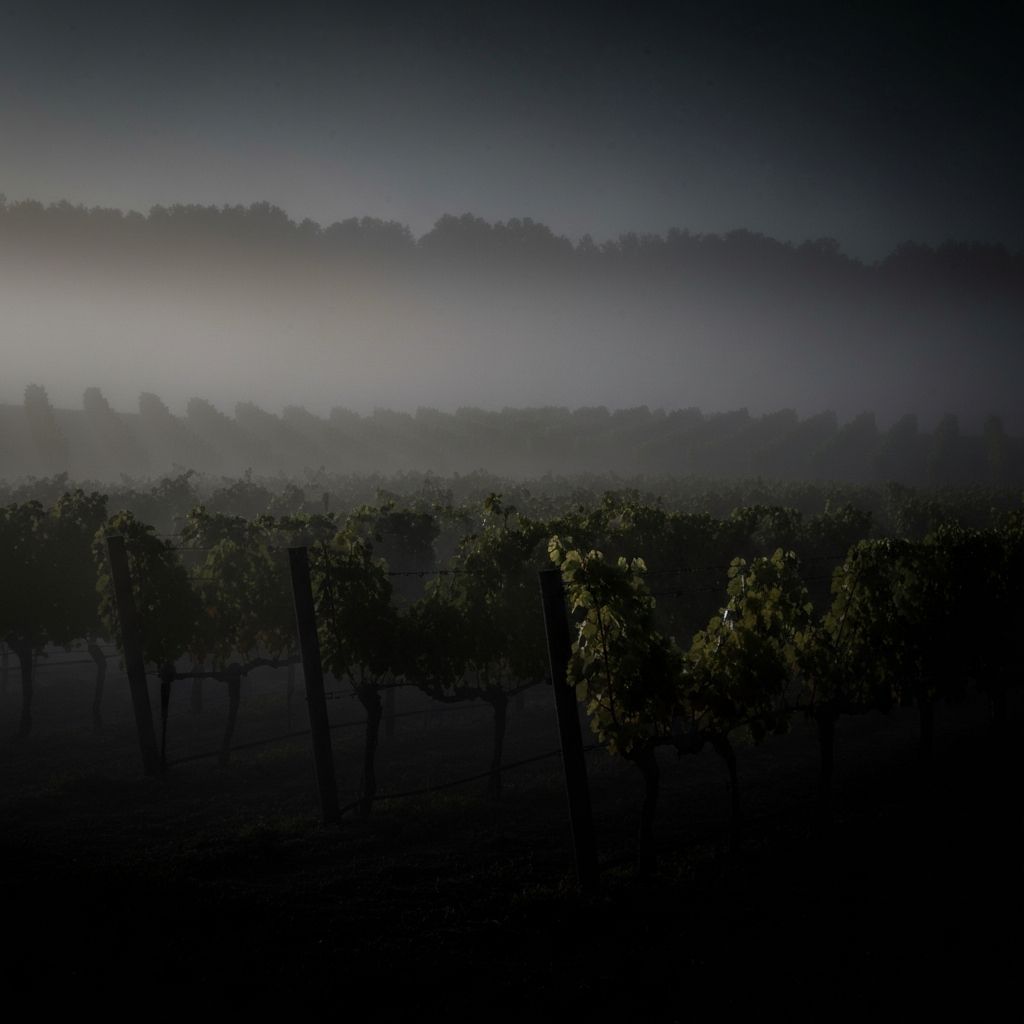
The best light for vineyard work is the first light. When the sun is low and the air is still cool, the vines reveal themselves more clearly than at any other time of day.
We walk the rows slowly in the early morning, looking at leaf color, checking cluster development, watching for signs of stress or disease. The slanted light catches things that direct sun would wash out—the subtle yellowing of a leaf edge, the uneven ripening of a cluster, the way the canopy has shifted since yesterday.
This is not romantic. It's practical. The observations made in these quiet hours inform the decisions we'll make throughout the day and the week. Should we thin this block further? Is that section ready to pick? Does that vine need more water, or less?
The answers don't come from data alone. They come from presence, from accumulated observation, from knowing these vines over seasons. Technology helps—we use it where it's useful—but there's no substitute for standing in the vineyard and paying attention.
By the time the heat of the day arrives, we've already gathered what we need. The real work of farming happens before most people are awake.
Estate Journal
Lake Chelan AVA
Eigner Estate™ Vineyard